
WHY EVERY GREAT STORY STARTS WITH AN IDEA?
Every unforgettable book, poem, or screenplay begins with a spark — a single thought or emotion that refuses to be ignored. This could be a memory, a “what if” question, or even a random image in your mind. Recognizing that spark and treating it with curiosity is the first step in the writing process.
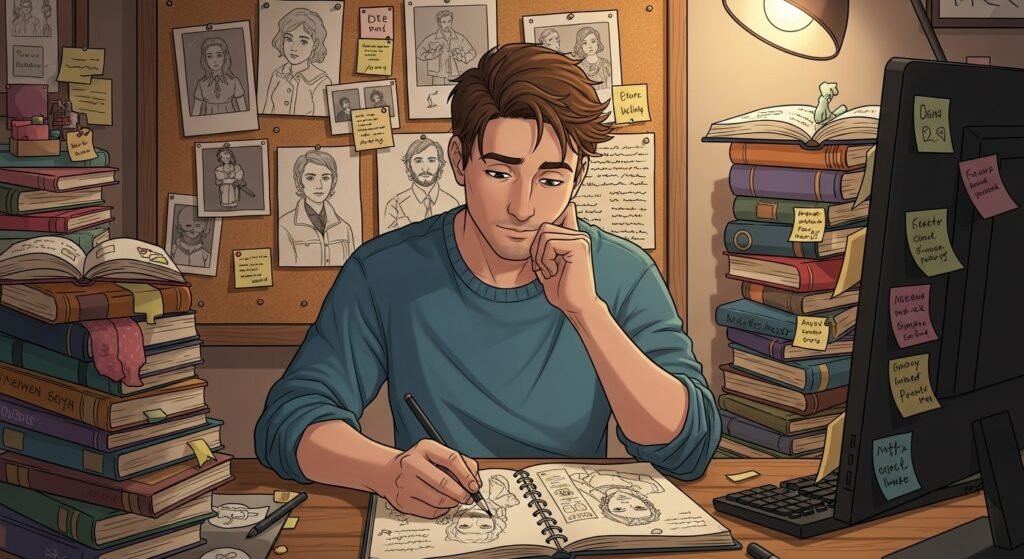
Pro Tip: Keep a small notebook or a notes app ready. Inspiration doesn’t schedule appointments.
STEP 1: WRITING YOUR IDEA BEFORE IT DISAPPEARS
Ideas are fleeting. Write them down immediately, even if they seem incomplete. Sometimes a phrase or a scene fragment is all you need to kickstart your creative process.
Store all your ideas in one place — a digital folder, a notebook, or an app like Notion. You’ll be surprised how many “scraps” turn into masterpieces.

STEP 2: BUILD A STRONG WRITING FOUNDATION
Before you dive into writing, spend time fleshing out your idea:
- Who are the main characters?
- What do they want, and what’s in their way?
- Where and when does the story take place?
- What emotions do you want the reader to feel?
A well-built foundation makes the actual writing flow much smoother.
STEP 3: LET YOUR FIRST DRAFT BE MESSY
The biggest mistake new writers make is trying to perfect the story in the first draft. Your first version is for you. It should be raw, unfiltered, and imperfect. Let it be chaotic. Editing is where the magic happens.
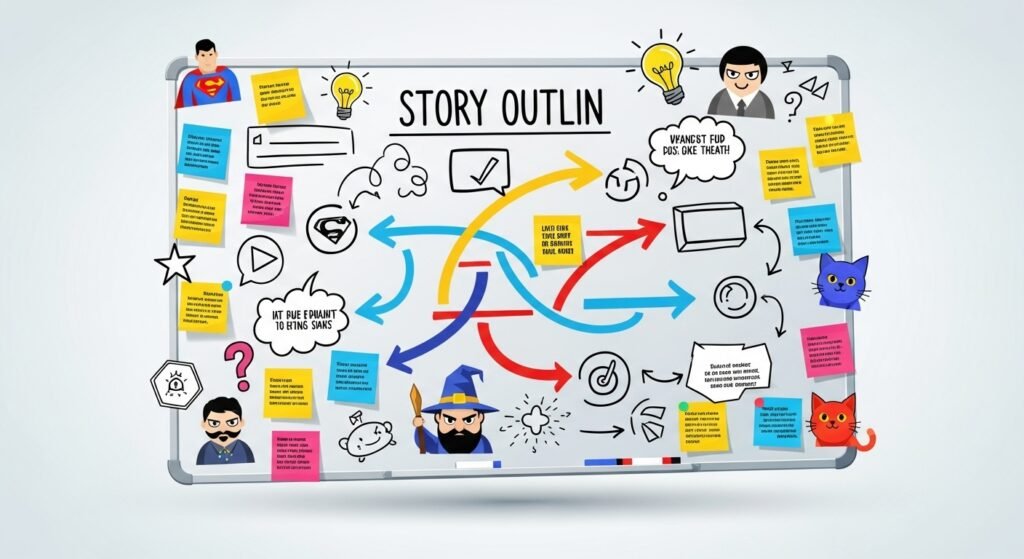
Pro Tip: “Write with the door closed, edit with the door open.” — Stephen King
STEP 4: EDIT LIKE A SCULPTOR
Editing is about chipping away at the unnecessary until your story’s shape emerges. Look for:
- Clarity: Are sentences easy to follow?
- Pacing: Does the story drag or rush?
- Dialogue: Does it sound natural?
Don’t be afraid to cut scenes or lines that don’t serve the story, even if you love them.
STEP 5: SHARE AND REFINE YOUR WRITING
Get feedback from trusted readers or writing groups. Listen carefully but stay true to your vision. Constructive criticism is a writer’s best friend for growth.
Pro Tip: Utilize trusted beta readers as they will give you the honest opinion.
CONCLUSION: EVERY WRITER HAS A VOICE
Turning an idea into a captivating story is not about rigid formulas; it’s about discovering your voice and letting it shine. Keep writing, keep learning, and most importantly, keep believing that your stories matter.
Need insights on dialogue writing? See the top 10 tips for beginners.
Актуальная публикация, лично я
только что изучал по вопросу??